
What we pour
- Driveways and parking pads
- Walkways and sidewalks
- Patios
- Pole barn, shop, and garage slabs
- Footers and foundations
- Pads for HVAC units, generators, and equipment
Prep: sand, compaction, and base
Loose sand shifts, and a slab poured on it can settle unevenly or crack once a truck rolls over a soft spot. We strip topsoil, roots, and organic material, then compact the subgrade in lifts. A layer of compacted gravel or crushed stone goes on top to spread loads and give the concrete a consistent bed. Where the ground is low, we bring the grade up first so the slab doesn't sit in a puddle every afternoon in July.
Forms and reinforcement
Forms set the shape, height, and slope of the finished surface, so they get staked straight and checked for grade. Reinforcement depends on the job: rebar for footers and foundations or slabs carrying heavy loads, welded wire mesh for flatwork, and fiber added to the mix to fight surface shrinkage. Steel only helps if it ends up inside the concrete, so we set it on chairs instead of letting it lie on the dirt.
Joints and the truth about cracks
Every slab shrinks. Control joints — cut or tooled grooves at planned intervals — create weak lines so cracking happens there instead of wandering across the middle. Spacing depends on thickness and layout. Expansion or isolation joints separate the slab from the house, posts, and other fixed objects so they can move independently.
Slope for summer storms
A two-inch afternoon downpour is routine here. Driveways, walks, and patios need a gentle fall away from the house so water never sheets toward the foundation or into a garage. Shop and barn slabs get a slight pitch toward the doors. We set that slope in the forms, not after the fact.
Curing in the heat
Concrete gains strength through a chemical reaction that needs water. In Florida sun the surface can dry out faster than the inside, which leads to weak, dusty surfaces and crazing. Pouring early, dampening the base, and keeping the slab moist or sealed with a curing compound for the first days all help.
Finishes
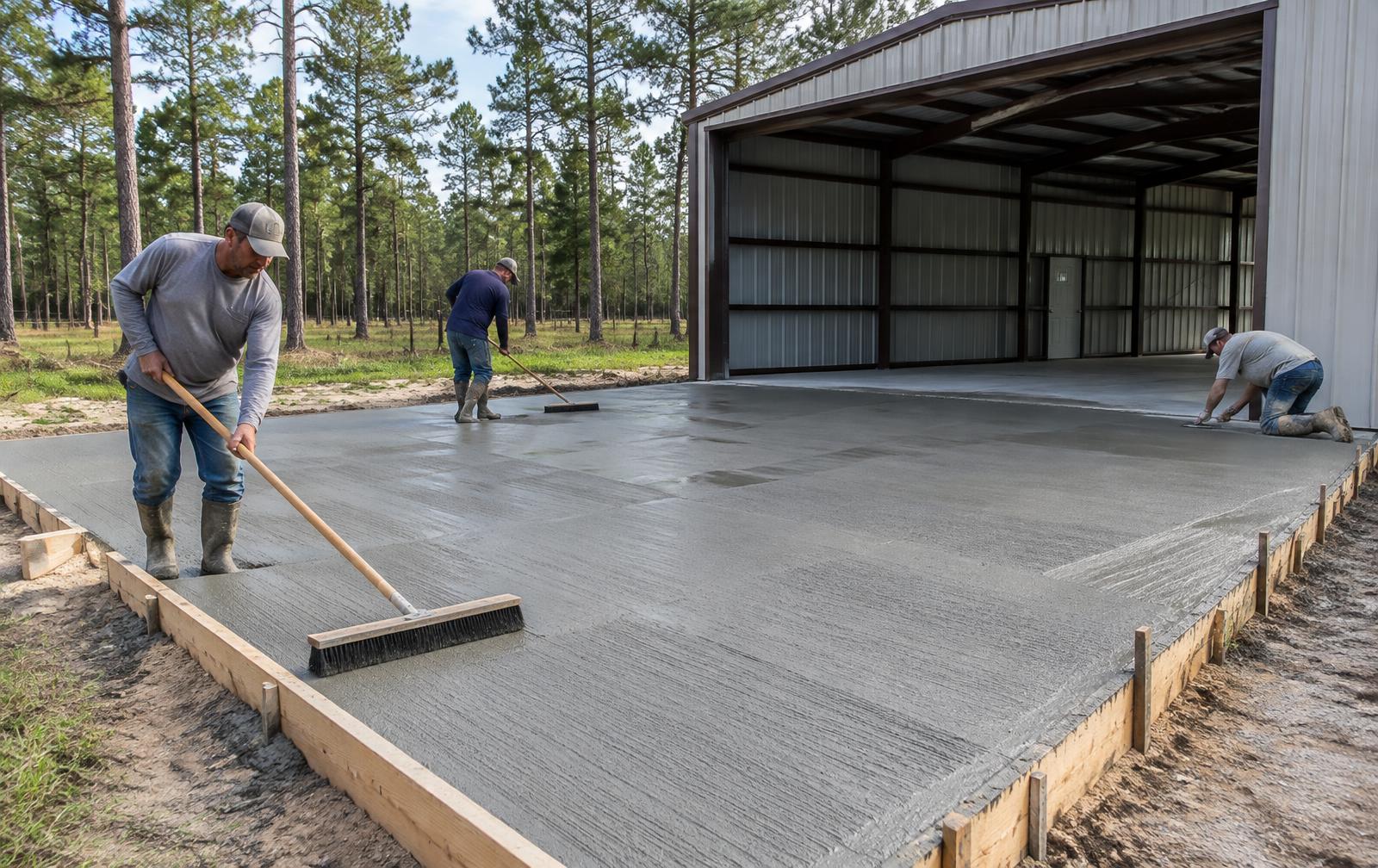
Broom finish leaves fine ridges for traction — the go-to for driveways, walks, and anything that gets wet. Smooth trowel is dense and easy to sweep, good for shop and garage floors. Exposed aggregate washes off the top layer to reveal stone, a decorative option for patios and walkways.
Loads and thickness
A walkway, a car driveway, and a slab under a loaded tractor or hay trailer are three different jobs. Heavier loads call for more thickness, better base, and more steel. We'll talk through what's going on yours and recommend accordingly; the right answer depends on your soil and use, so take any number you see online with a grain of salt.
Tearing out bad concrete
Oak roots can heave a sidewalk, and washouts can undercut a driveway edge until it snaps. We break out and haul off the damaged sections, fix the cause — roots, drainage, soft base — and pour new concrete tied into what's staying.
Pairs well with
Many slabs we pour go under pole barns and shops, or become the base for a patio or porch. When you're ready, Start Your Quote.