After water gets in
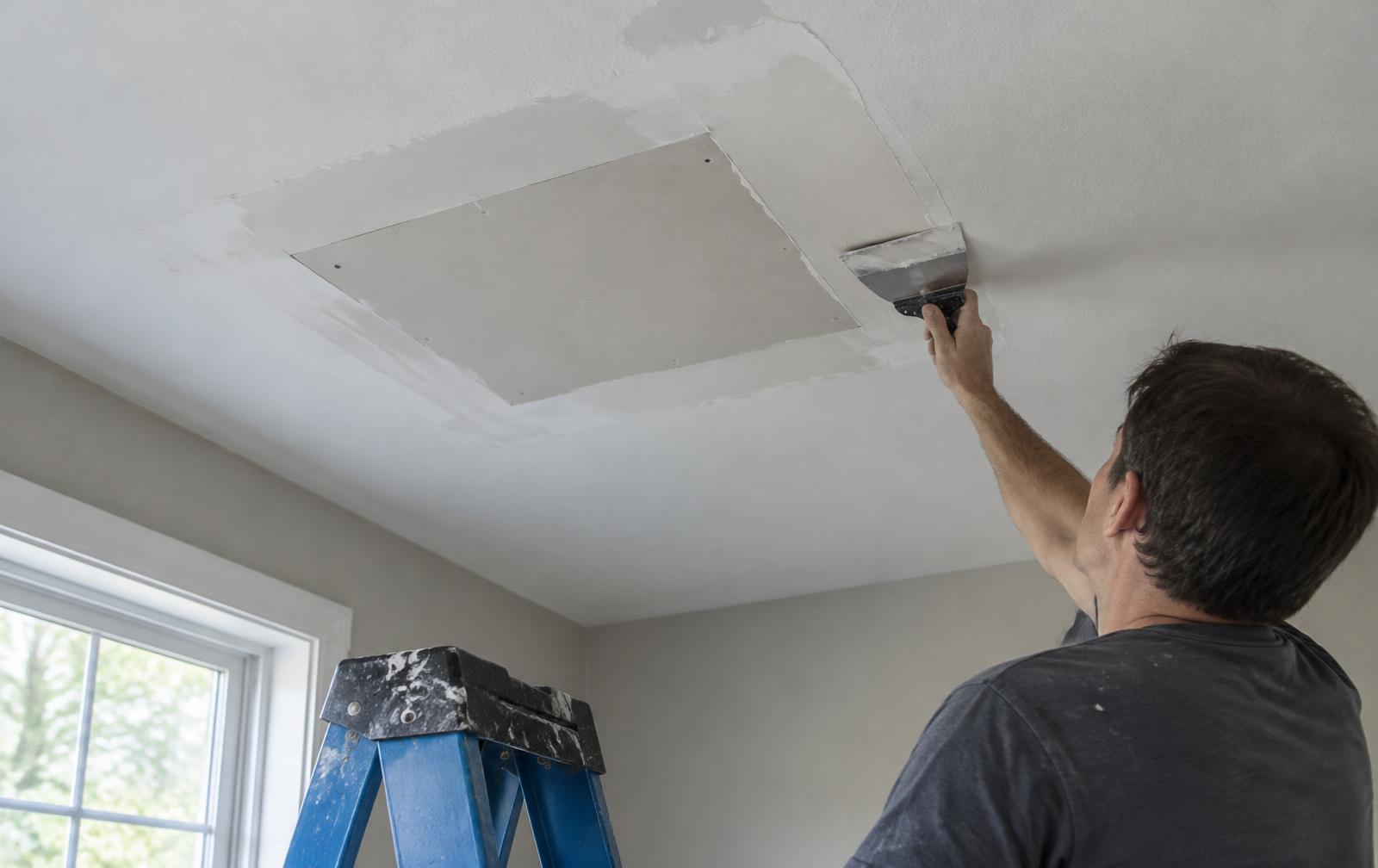
A brown ring on the ceiling is usually the first sign of a roof problem, but the damage behind it is often bigger than the stain. Here's how we handle water-damaged drywall:
- Stop the source. There's no point fixing a ceiling under an active leak. If the roof is the culprit, it gets repaired first.
- Cut out wet board. Gypsum loses strength when soaked. We remove it back past the wet area to solid, dry material.
- Check what's behind it. Wet insulation gets pulled and replaced — it holds water against wood for weeks. We look at joists, rafters, and studs for rot or staining.
- Let it dry. In North Florida humidity, cavities don't dry on their own quickly. Fans and dehumidifiers bring framing moisture down before new board covers it.
- Hang, tape, and finish. New board goes up, seams get taped, and the patch is feathered and textured to blend in.
Florida's warm, damp air makes closed-up wet walls a breeding ground for mold. Rushing this step is the most common mistake we see in quick-fix repairs.
New construction and additions
On an addition or new build, drywall comes after framing, rough-in, insulation, and inspections. We hang ceilings first, then walls, run sheets to minimize butt joints, and fasten on the schedule the code requires. Corners get bead, seams get tape and multiple coats, and everything is sanded ready for primer.
Picking the right board
- Standard board for most walls and ceilings.
- Moisture-resistant board for bathrooms, laundry rooms, and other damp spaces.
- Fire-rated board where code requires it, such as walls between an attached garage and the house.
- Sag-resistant ceiling board where wider joist spacing or textured ceilings need the extra stiffness.
Finish levels and textures
The finish level should match the look you want. Garages and utility spaces may only need taped seams. Living spaces typically get a full Level 4 finish. Smooth walls under bright windows or raking light show every flaw, so a skim coat may be worth it.
Texture is where patches either disappear or stick out. Orange peel is a fine, bumpy spray; knockdown is a heavier spatter flattened with a trowel; smooth walls need careful sanding and feathering. We match what's already in the room so the repair blends with the rest of the ceiling.
Holes, cracks, and dings
Doorknob holes, popped nail heads, settling cracks at corners, and anchor holes from a TV mount are quick fixes compared to water damage, and we can knock them out during a larger project or on their own.
Where drywall fits in a storm repair
After a hurricane or bad thunderstorm, the order matters: dry the house in, repair the roof, repair any damaged framing, dry out the cavities, and then close up the walls and ceilings. Because we do the roofing and the interior work, one crew handles the whole sequence. Start Your Quote and we'll look at both.