
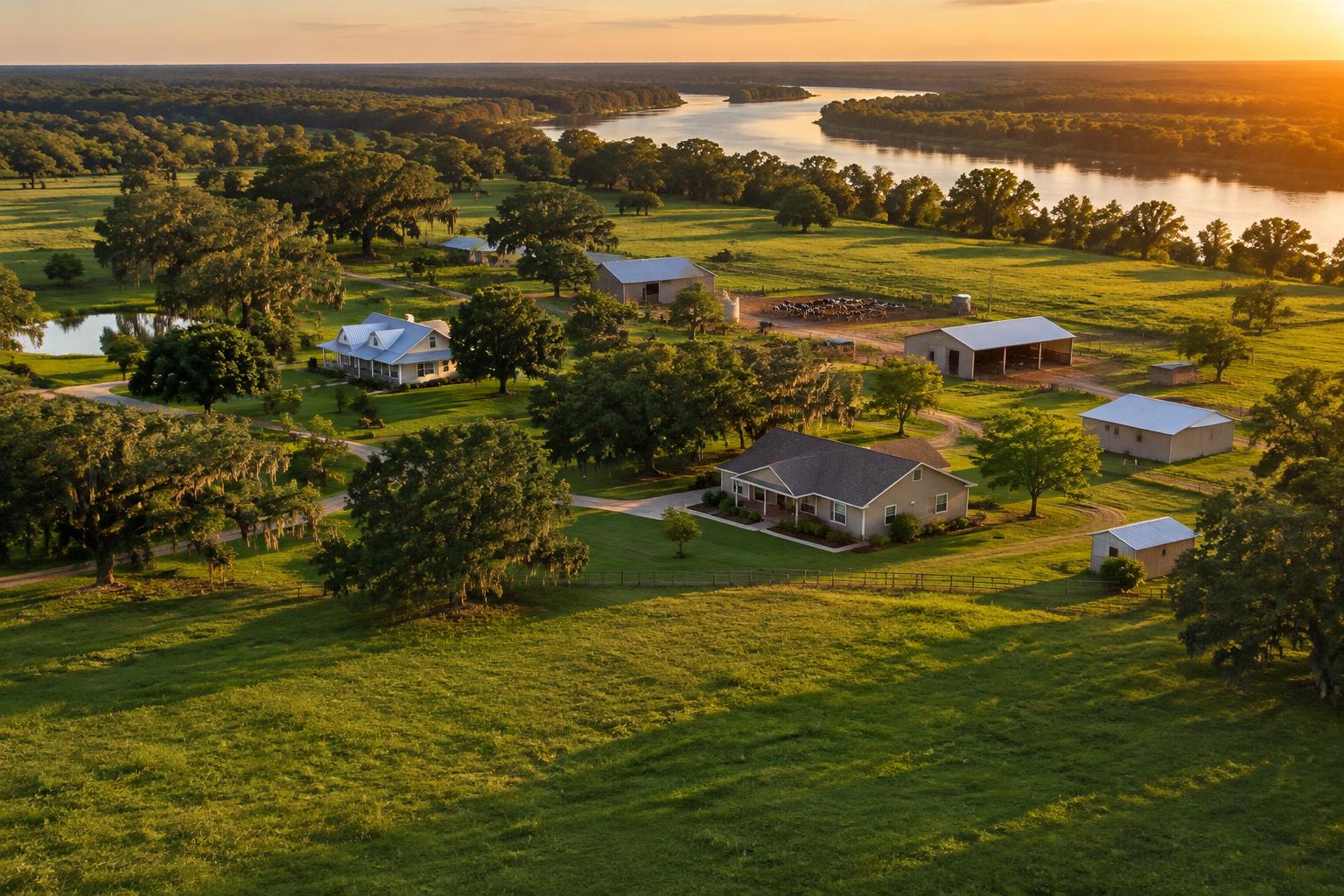
Serving All of Gilchrist County
Gilchrist County coverage runs from Trenton to Bell, Fanning Springs, Wannee, and properties around the Santa Fe River near Ginnie Springs. The Suwannee borders the county to the west and the Santa Fe shapes its northern side. River-area houses may be occupied full time or used as cabins and second homes; both need roof connections that keep water outside when the next heavy shower arrives.
Away from the river corridors, farms and dairies create demand for equipment shelters, workshops, and metal roofs over daily operations. Open acreage changes wind exposure, while wooded lanes bring debris and slower drying. We look for trapped debris on shaded roofs and loose edges on buildings exposed to the wind.
Tell us whether the property is occupied, how access is arranged, and which buildings should be reviewed. Rural entrances and sandy ground can affect how an inspection or later construction is organized. We serve the scattered homes along Gilchrist County roads as well as the towns. Share the roof's condition and the access details so we can plan the visit.
Follow the moisture before treating the stain
Dark growth on shingles, a ceiling mark, and moisture under a panel can arise from different causes. A tree-shaded roof dries slowly; an under-vented assembly can collect damp air; a flashing defect can admit rain during certain wind directions. We trace the moisture to its source before choosing a repair.
When an opening can be located and the surrounding material is serviceable, a focused roof repair may be appropriate. Porch intersections and valleys warrant particular attention because several surfaces meet there, and water can travel before becoming visible inside.
Cabins need dependable details between visits
A second home may go unoccupied through weeks of rain, so a small unresolved leak can continue without anyone seeing the first stain. Let us know the last time the interior was checked and whether a caretaker or neighbor can provide authorized access. Photos taken from the ground can show us loose trim or staining around the eaves before the visit.
For owners considering metal for a river-area home, roof slope, deck condition, underlayment, and ventilation remain central decisions. Concealed fasteners and exposed screws need different upkeep. Both systems need properly flashed edges and wall connections.
Know when the underlying roof needs rebuilding
Shingles worn across several slopes, recurring leaks, or soft supporting wood may point toward a full roof replacement. Removing the old material allows those hidden conditions to be addressed. We check and address damaged decking before the new covering goes on.
For a Gilchrist County roofing project, we establish the permit requirements with the county building department, or the city's for addresses inside city limits. Roof work must follow the applicable Florida Building Code wind requirements, and the proposed scope determines which inspections are needed.
Plan the workshop from the ground upward
On acreage outside Trenton or Bell, pole barns and shops often combine a large roof with a slab or equipment pad. Prepare and compact sandy soil before pouring a slab. Tell us what equipment the floor will carry and where rainwater collects so we can discuss loads, elevation, and drainage.
Our concrete work considers base preparation, joints, curing, and drainage. Planning the floor with the shelter avoids conflicts between post positions, doors, and runoff from the roof. What you store and how you move it through the building should influence that plan.
Tell us about your Trenton-area property
For a neighboring county across the Suwannee, see Mayo and Lafayette County roofing. If the address is in Gilchrist County, Start Your Quote with the community, roof material, and symptoms. Include whether the project involves a cabin, the main residence, or an outbuilding so the first conversation begins with the right building in mind.