
Is your roof finished?
Some roofs can be patched for years; others are past the point where repairs are worth the money. These are the signals that usually point toward a full replacement:
- Shingles curling, cupping, or cracking across entire slopes rather than in one spot.
- Heavy granule loss — gutters full of grit and bare, shiny patches on the shingles.
- The deck feels spongy underfoot, or sags are visible from the ground.
- Leaks showing up in several rooms over the course of a year.
- Rust holes or thinning steel throughout an old metal roof, not just at fasteners.
- Widespread damage after a named storm or tornado warning.
If what we find is localized, we'll say so and point you toward a repair instead — replacement swaps out the whole system, while a repair fixes specific components and leaves the rest in service.
Our replacement process, step by step
- Inspection. We get on the roof and into the attic where possible, photograph problem areas, and measure every slope.
- Written quote. Scope, material, decking allowance, and price, in writing. No one leans on you to sign.
- Permit. We file with your county or city building department before any shingles or panels come off.
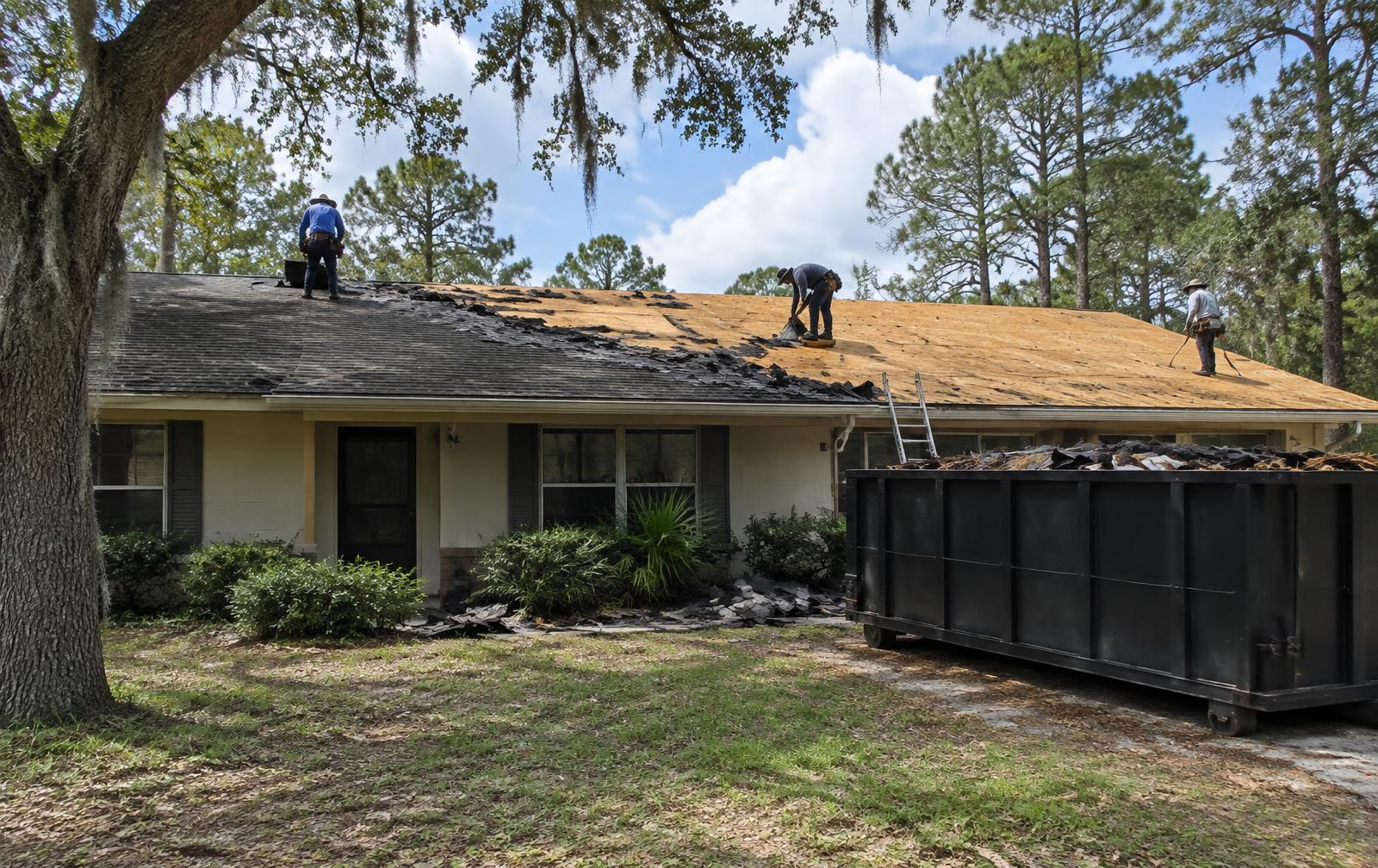
- Tear-off. Old roofing comes down to the deck. Landscaping beds get tarped and a dumpster or trailer catches debris.
- Deck inspection. Soft, delaminated, or rotted sheets get cut out and replaced, and the deck is fastened to current code.
- Underlayment. A secondary water barrier goes down over the whole deck, with extra protection in valleys and at eaves.
- Install. New drip edge, flashing, vents, and roof covering, installed to the manufacturer's high-wind instructions.
- Cleanup. Rolling magnets sweep the yard and driveway for nails, and every scrap goes with us.
- Walkthrough. We walk the property with you, answer questions, and the building inspector signs off on the permit.
Picking the new roof system
Metal is the long-haul option and our specialty — standing seam for houses, exposed-fastener panels for barns and shops. Learn more on the metal roofing page.
Architectural shingle keeps upfront cost lower and fits neighborhoods with HOA guidelines. It's heavier and more wind-rated than the three-tab shingles on many older homes in Duval and Clay counties.
Low-slope systems are for porch roofs, additions, and commercial buildings where pitch is too shallow for shingles. They need careful detailing at walls and drains.
Code, wind, and permits
Florida's building code sets wind-resistance requirements based on where the building sits, and a re-roof has to meet them. That covers how the deck is nailed, which underlayment is used, how roof-to-wall connections are handled in certain cases, and how the covering is fastened. The building inspector checks this work, which protects you as much as it holds us accountable.
The wind mitigation payoff
Once the new roof is finished and permitted, it's a good time to have a licensed inspector complete a wind mitigation report. The form documents roof covering, deck attachment, secondary water resistance, and roof shape. Insurers in Florida are required to offer discounts for qualifying wind-resistant features, so a new roof can mean a lower wind premium. Your agent can tell you what credits apply.
Storm-driven replacements
The Big Bend and inland counties don't get a pass on hurricanes. Idalia came ashore near Keaton Beach and tore through Taylor, Lafayette, Suwannee, and Hamilton counties; Helene followed a similar path a year later; Hermine hit the same coast before them. Spring squall lines can also spin up tornadoes well away from the Gulf. When a storm takes a roof past repair, we document the loss for your claim, dry the house in, and schedule the replacement once the insurer decides.
Not sure where to start? See the roofing overview or Start Your Quote.