Two families of metal panels
Nearly every metal roof in our part of Florida falls into one of two camps, and picking the right one comes down to the building, the budget, and how much maintenance you're willing to do down the road.
Standing seam — concealed fasteners
On a standing seam roof, each panel is held by clips screwed to the deck, and the next panel snaps or is mechanically seamed over those clips. Nothing punctures the face of the steel. Because the clips let panels slide slightly, the roof can grow and shrink through a 95-degree afternoon and a 70-degree night without stressing the fasteners. That's the main reason it costs more and lasts with very little attention. It's our usual recommendation for a primary residence, especially a home you plan to stay in.
Exposed-fastener — 5V, R-panel, and PBR
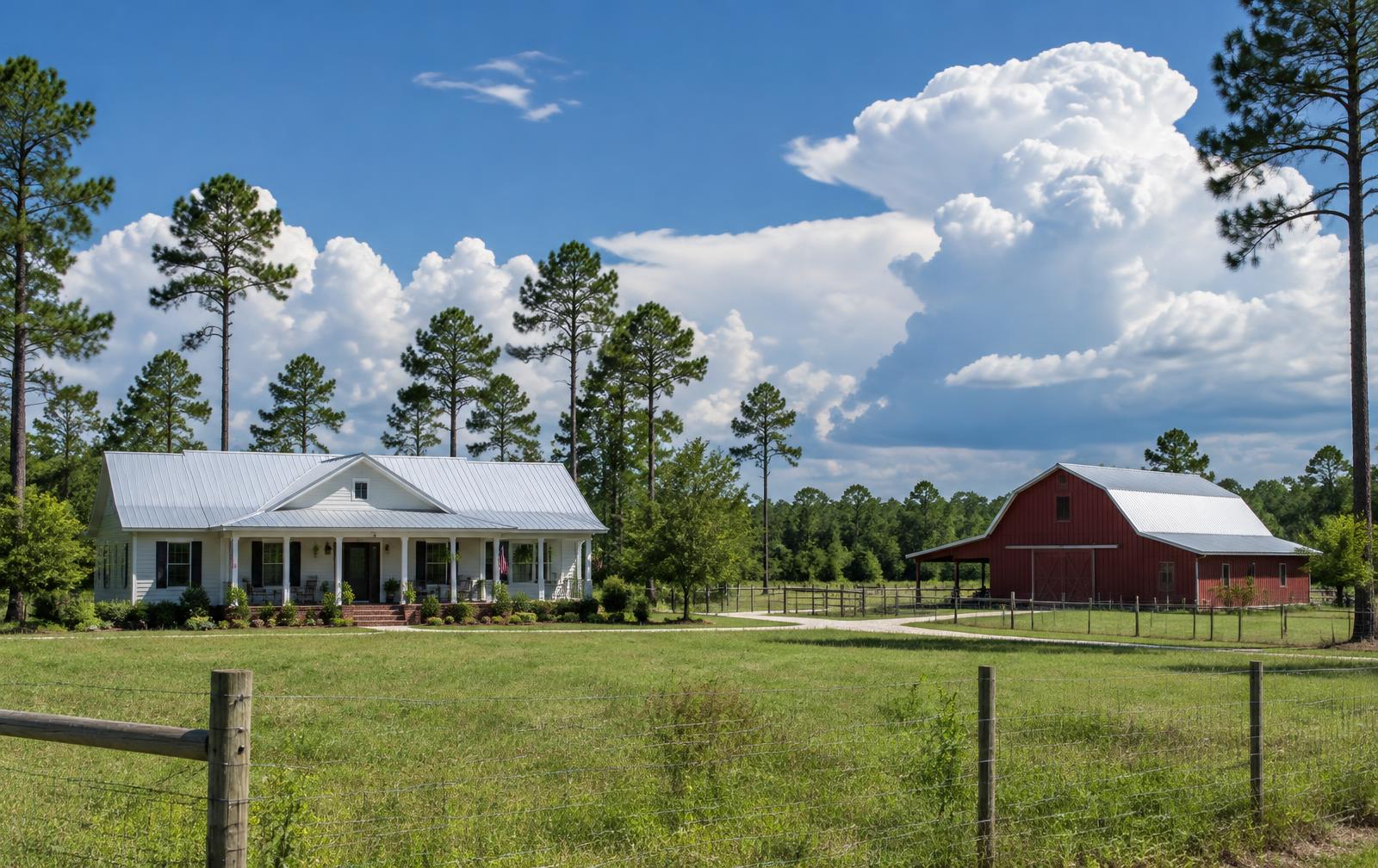
5V crimp has a traditional Florida look and shows up on old Cracker-style homes and new farmhouses alike. R-panel and its heavier cousin PBR (purlin bearing rib) have taller ribs and are built to span between purlins, which is why you see them on pole barns, equipment sheds, shops, and commercial pole buildings. All three are screwed straight through the panel with neoprene- or EPDM-washered screws. They go on faster and cost less than standing seam, and they're a sensible choice where function matters more than finish.
Why metal makes sense in this climate
- Summer downpours. Smooth panels and long continuous runs move water off the roof fast, with no laps every five inches for wind-driven rain to work under.
- Heat. Lighter colors and reflective coatings bounce back a good share of the sun instead of soaking it into the attic.
- Wind. When it's fastened to the tested pattern, a metal roof resists uplift well. Edges, ridges, and eaves are where wind pulls hardest, so that's where we're most careful.
- Trees. Pine straw and oak leaves slide off a slick metal surface instead of matting in valleys and holding moisture against the roof.
Gauge, coatings, and what lasts
Gauge is the thickness of the steel; a lower number means thicker metal. Thicker panels resist dents from falling limbs and hold their shape better between supports. Equally important is what's on the steel: a metallic coating such as galvalume protects against rust, and a painted finish system on top handles UV and color fade. Bare cut edges and scratches are where corrosion starts, so we cut and handle panels to keep that damage to a minimum.
The specific products we carry: [PLACEHOLDER: metal panel brands/colors Five14 installs]. We'd rather show you real samples than list specs you can't see.
Re-screwing an aging metal roof
Lots of barns and older homes around Suwannee and Columbia counties have panels that are still structurally fine but leak at nearly every screw. Sun cooks the washers until they crack, and years of expansion can loosen screws or enlarge the holes. Pulling the old fasteners and installing new ones — upsized where the hole is wallowed out — is far cheaper than new metal. We'll also look for rust-through at laps and along the eave before recommending it, because new screws can't save rotted steel.
Going over shingles vs. tearing off
Installing metal over an existing shingle roof saves the cost of tear-off and disposal, and the Florida Building Code allows it in some situations. It's a bad idea, though, when the decking is soft or delaminated, when there's already more than one layer, or when the existing roof is holding moisture. You also lose the chance to inspect and re-nail the deck, which affects wind resistance and can matter on a wind mitigation inspection. We'll check the deck and the code requirements for your house and tell you honestly which route makes sense.
Condensation and underlayment
North Florida humidity is the hidden enemy of metal buildings. In an open barn or shop, the underside of the panels can sweat on cool mornings and drip onto equipment, feed, or a concrete floor. Options include panels with a factory-applied condensation-control fleece, a vapor barrier, or improved ventilation at the eaves and ridge. On homes, a high-temperature synthetic underlayment beneath the metal keeps any moisture that forms from reaching the decking.
Insurance and wind mitigation
Some insurers look favorably on metal roofing, and a newly permitted roof gives you documentation of the roof covering, deck attachment, and secondary water barrier. Those items feed into the state wind mitigation form, which can qualify you for credits on your premium. Talk to your agent about what your policy rewards, and we'll make sure the details are installed and documented.
Back to the bigger picture
Metal is one of several systems we install. Our roofing overview covers shingle and low-slope options too, and when you're ready, Start Your Quote so we can look at your building in person. Every metal job is overseen by Florida Certified Roofing Contractor CCC1336952.